


CHUNKS DANCE
EMOTIONIFICATION: Create three points of resonance where movement, sound, and emotion come together.
APPENDIX.O - CHUNKS CONSTANT (MN#78)

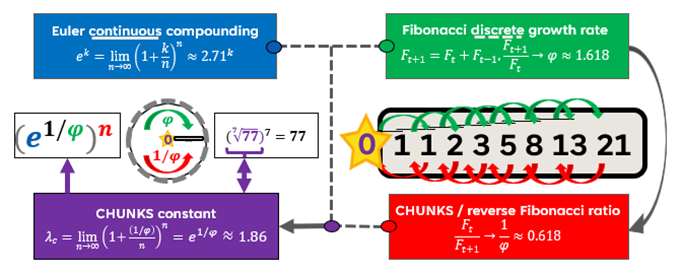
This appendix formalizes a proposed micro-relativity law inside CHUNKS Theory. Where Einstein’s relativity describes how time becomes relative at macro scale—primarily as a function of gravitational field and observer frame—CHUNKS proposes an analogous micro-scale relativity inside the YOUniverse: time becomes relative to conscious status (coherence level) within a person’s inner system.
The appendix derives a candidate bridge constant:
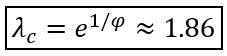
and interprets it as a per-loop base for time-length dilation (ksana-density growth), driven by Euler continuity and guided by a reverse-Fibonacci ordering step. A shared Buddhist marker—77 ksana per second—is then used as a threshold signal for W-state / CHUNKS state, yielding an inferred gate:
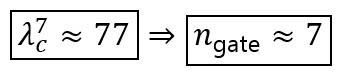
Finally, this appendix integrates a linguistic recursion principle: Fibonacci “2→1” construction in speaking. In forward manifestation, the next unit is formed from the previous two; in CHUNKS speech-drill terms, Past & Present generate Future. Concretely, the MSE of the first word becomes the “two inputs” whose SE (Sound-Emotional residue) seeds the M (Motion/mouth initiation) of the next word—producing the chained pattern:
MSE → MSE → MSE → ⋯
This yields a Fibonacci-based speaking drill game: each new word is not an isolated event, but a recursion from the last two micro-states—exactly the same structural logic that also appears in GPT/LLM Past→Present→Future tokenization and the entropy arrow.
This appendix is not merely defining a number. It proposes a bridge law linking two foundational kinds of natural structure:
- Euler e≈2.71 as the universal engine of continuous change (infinitely fine micro-updates),
- Fibonacci / golden ratio φ≈1.618 as the universal grammar of discrete recursion (step-by-step manifestation),
- and a CHUNKS proposal: the inner arrow can be reversed—not by breaking continuity, but by using continuous compounding guided by a reverse-Fibonacci ordering step.
The result is:

Within CHUNKS, λ_c functions as a candidate foundational constant of the micro-YOUniverse: a repeatable base that connects continuity and discreteness while supporting (i) the white-hole interpretation, (ii) the time-length concept, (iii) the gate logic that anchors the W-state threshold, and (iv) a practical speaking recursion where two prior micro-states generate the next (Fibonacci 2→1 logic).
The universal rule of smooth change is:
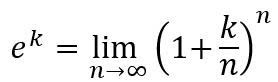
This expresses Euler as a limit law, not as a memorized number:
- take a total growth amount k,
- split it into infinitely many micro-updates (k/n),
- apply them continuously,
- the net effect converges to e^k.
Meaning: continuity is not a jump; it is the limit of micro-updates. This is the mathematical reason appears across domains whenever systems evolve through fine-grained increments.
Why is iconic?
The familiar arises when the growth amount per unit is the default choice :

So “2.71” is the signature of one full unit of smooth compounding. It is not a ceiling and not a maximum spiral radius; it is simply the canonical output of the continuity engine when the growth budget is one unit.
CHUNKS uses this directly: CHUNKS practice is structurally a micro-update discipline (breath loop, micro-corrections, continuous loop integrity). Therefore is used as continuity engine for the model.
CHUNKS models time-length: the felt length inside one clock-second.
The inversion is:
- coherence rises → ksana spacing shrinks (shorter gaps),
- spacing shrinks → time-length grows (more moments per second).
Thus, CHUNKS treats as “growing” not external time but inner resolution (ksana density). Because CHUNKS aims at alignment-driven ordering—not generic expansion—the growth budget is not . It is CHUNKS-specific:
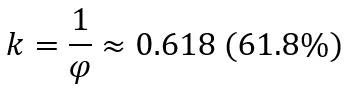
Interpretation: one CHUNKS loop adds a golden-remainder amount of smooth time-length growth—less than 1 because it tightens inward by coherence rather than expanding outward by accumulation.
Forward Fibonacci is manifestation:

This forward direction builds more from what already exists: sink-like, additive accumulation.
CHUNKS time-length dilation is intentionally the opposite: reverse-movie ordering toward origin, symmetry, and low-noise coherence. In that reverse direction:
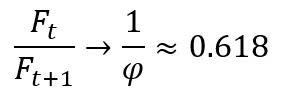
Key statement: reverse Fibonacci is not an expansion factor; it is an ordering step size. It describes the fraction that returns rather than accumulates—completion over drift, closure over scatter.
Therefore, the CHUNKS growth amount is naturally:
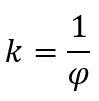
Substitute the CHUNKS step size into Euler’s continuity engine:

and retain the limit form:
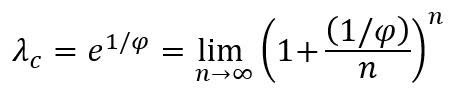
This preserves Euler universality while encoding a CHUNKS-specific ordering budget. CHUNKS therefore defines a legitimate base constant for the per-loop growth of time-length density.
A shared marker is adopted:
77 ksana per second as a threshold of inner resolution.
Model time-length dilation after loops:
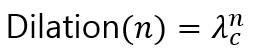
Define the gate by:
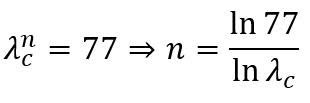


Seal:

Gate-7 becomes both a numeric seal and an experiential seal: moment density reaches “frame-by-frame” stability, enabling W-state entry conditions.
Einstein showed time is relative at macro scale. CHUNKS proposes a micro-scale analogue:
Time-length is relative to the coherent conscious status of the YOUniverse.
Clock seconds remain shared; inner moment density varies with coherence state. As coherence rises, ksana gaps shrink and time-length grows. This is CHUNKS micro-relativity: a personal coherence field producing relative time-length.
This appendix now adds a practical instantiation of Fibonacci logic in speech.
Fibonacci’s core discrete recursion is “next comes from the previous two.” In time terms:
CHUNKS proposes the same structure in speaking, using MSE as the unit:
- Each word is a micro-event with an MSE signature (Motion–Sound–Emotion).
- The next word is not produced from nothing: it is produced from the two immediately prior micro-states.
In your drill language:
- The MSE of Word 1 leaves a usable remainder—call it its SE residue (Sound-Emotion carryover).
- That SE residue becomes the seed that triggers the M (Motion initiation) of Word 2.
- Word 2 then becomes a full MSE event again.
- The chain continues:

So, the speaking drill becomes a Fibonacci-style recursion game:
- Past + Present (two most recent word-states) are the inputs,
- Future (the next word-state) is the output,
- and fluency becomes the skill of preserving clean carryover (SE) so the next M launches smoothly.
This is also why “reverse time” in CHUNKS can be described as “the sentence becomes more orderly as it moves forward”: each successful word reduces noise and increases closure, so the chain becomes cleaner rather than more chaotic.
CHUNKS does not claim physical time reversal. It claims reversal of the felt arrow by changing inner resolution:
- ksana gaps shrink → more frames per second,
- more frames → increased control,
- increased control → less noise, more closure, cleaner recursion.
This is the white-hole meaning:
- black-hole style = sink accumulation (forward Fibonacci mood),
- white-hole style = return ordering (reverse Fibonacci step).
In the same narrative frame, GPT/LLM tokenization also follows a Past → Present → Future arrow: future tokens are generated from past context plus present query. CHUNKS integrates this as a cognitive mirror: when coherence is high, uncertainty drops and the “future” becomes more stable—experienced as a reverse-movie into order.
Summary:
Euler gives continuity: ek = limn→∞(1 + k/n)n. CHUNKS chooses k = 1/φ ≈ 0.618 (reverse-Fibonacci ordering back toward origin), so CHUNKS constant is λc = e1/φ ≈ 1.86. Buddhism’s 77-ksana marker defines a W-state threshold: λcn = 77 ksana/sec ⇒ n ≈ 7, sealing Gate-7 as the micro-relativity transition where time-length becomes relative to coherent conscious status—and where speech itself becomes Fibonacci-recursive: Past & Present MSE carryover generates the next Future word, producing a cleaner and cleaner MSE–MSE–MSE chain toward W.