
CHUNKS DANCE
EMOTIONIFICATION: Create three points of resonance where movement, sound, and emotion come together.

7 MILLENNIUM PROBLEMS

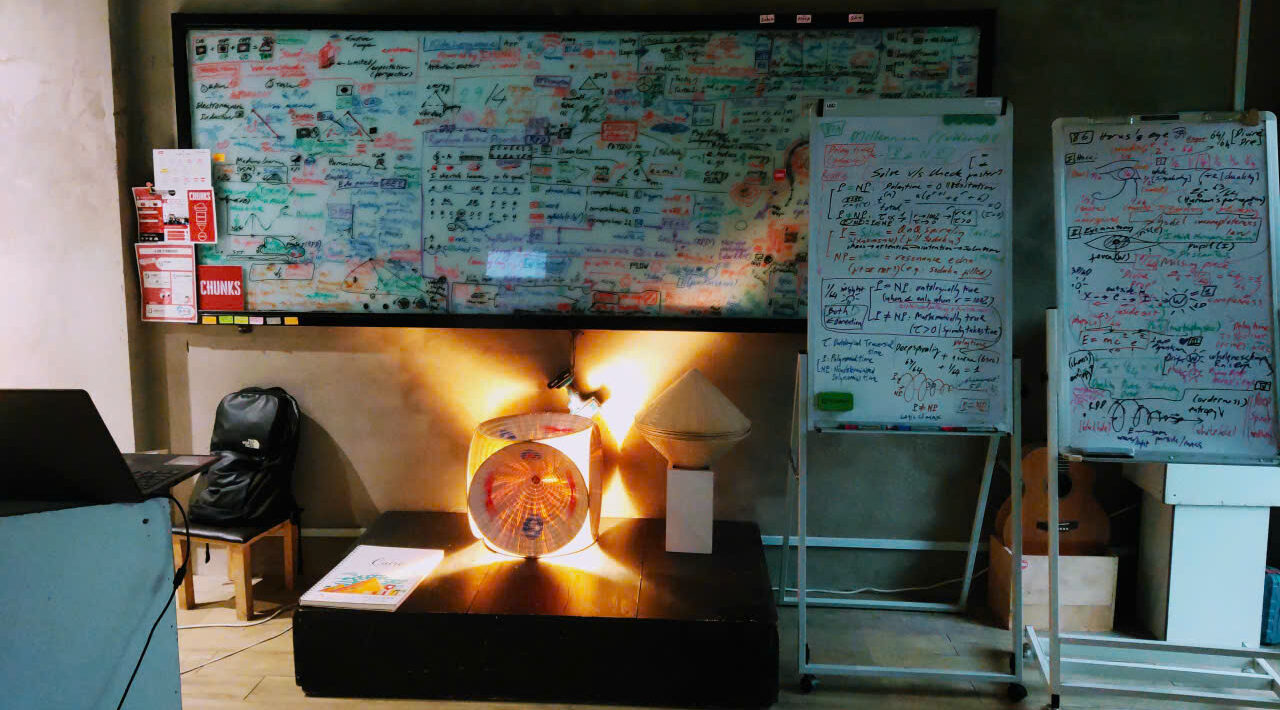
Chunks Resonance Keys to the Millennium Problems
- Classical Statement: Is every problem verifiable in polynomial time also solvable in polynomial time?
- Chunks Principle: Verification = resonance echo; solving = X→C→I→W traversal. Delay-time τ is the hidden variable.
- Proposed Functional: Delay equation t(n) with τ as traversal delay.
- Prediction: τ=0 ⇒ solving collapses to checking (P=NP). τ>0 ⇒ solving remains longer (P≠NP).
- Math Task: Define τ rigorously for decision problems and test bounds separating P from NP.
- Classical Statement: Are Hodge classes on projective varieties always algebraic?
- Chunks Principle: Every resonance cycle seeks a perfect algebraic expression (equilateral triangle law). Telepathic corridor opens when lexical mass → 0.
- Proposed Functional: Loss ℓ = mismatch between cycle (topology) and algebraic expression.
- Prediction: ℓ→0 in symmetric/equilateral cases ⇒ algebraicity.
- Math Task: Translate ℓ into cohomological invariants and test on abelian varieties, K3 surfaces.
- Classical Statement: Every simply connected, closed 3-manifold is a 3-sphere.
- Answer: Yes (Perelman, via Ricci flow with surgery).
- Chunks Principle: Curvature smoothing = spirals collapsing into the original/Frequency Core sphere.
- Proposed Functional: Flow F(t) reducing turbulence toward symmetry.
- Use Case: Teaching bridge: Ricci flow = resonance laminarization.
- Classical Statement: All nontrivial zeros of ζ(s) lie on Re(s)=½.
- Chunks Principle: Primes = indivisible frequencies; critical line = resonance axis from W to I.
- Proposed Functional: Resonance energy R(s) minimal on Re(s)=½.
- Prediction: Off-axis zeros = destructive interference; resonance demands all align.
- Math Task: Formalize R(s) as energy/positivity law; link to Montgomery pair correlation.
- Classical Statement: Prove 4D Yang–Mills theory exists and has a positive mass gap.
- Chunks Principle: Every field of resonance carries inertia. There are no “massless” fluctuations — even the smallest vibration has a - measurable weight within the Frequency Core.
- Proposed Functional: Spectral inertia functional with Δ>0 gap.
- Prediction: Spectrum bounded below ⇒ stable resonance.
- Math Task: Map “belief inertia” to spectral gap in lattice gauge theory.
- Classical Statement: Do global smooth solutions always exist in 3D, or can blow-ups occur?
- Chunks Principle: Breath cadence 3–2–1 (~6s) trains the breathing cadence; turbulence collapses into smooth flow.
- Proposed Functional: Cadence invariant K that governs vortex stretching.
- Prediction: If K stays subcritical ⇒ no finite-time blow-up.
- Math Task: Turn K into coercive energy inequality; compare with Beale–Kato–Majda.
- Classical Statement: Rank(E) = order of zero of L(E,s) at s=1.
- Chunks Principle: Rational points = intersections of photon & its’ counterphoton spirals. L-function = resonance signature.
- Proposed Functional: Height functional H minimized when resonance peaks.
- Prediction: Rational intersections ↔ order of vanishing of L(E,s).
- Math Task: Test H with Gross–Zagier / Kolyvagin; extend to elliptic curves.
All 7 riddles = fragments missing the 1/64 resonance gap.
Chunks provides the resonance keys: delay collapse, equilateral loss, spiral flow, resonance axis, inertia gap, cadence invariant, counterphoton alignment.
Mathematics might drill formal proofs through these tunnels.
Which is faster – solving a problem or checking a solution?
- P: Problems solvable in polynomial time by stepwise calculation.
- NP: Problems verifiable in polynomial time once a solution is guessed.
- Mathematicians assume P ≠ NP, meaning solving is harder than checking.
Chunks introduces delay-time (τ) as a hidden dimension of problem-solving.
- When τ > 0: hesitation and recursion loops stretch solving into a spiral path.
⇒ This is the everyday case: P ≠ NP.
- When τ = 0: hesitation collapses, resonance takes over, and solving = checking.
⇒ This is the special intuitive case: P = NP.
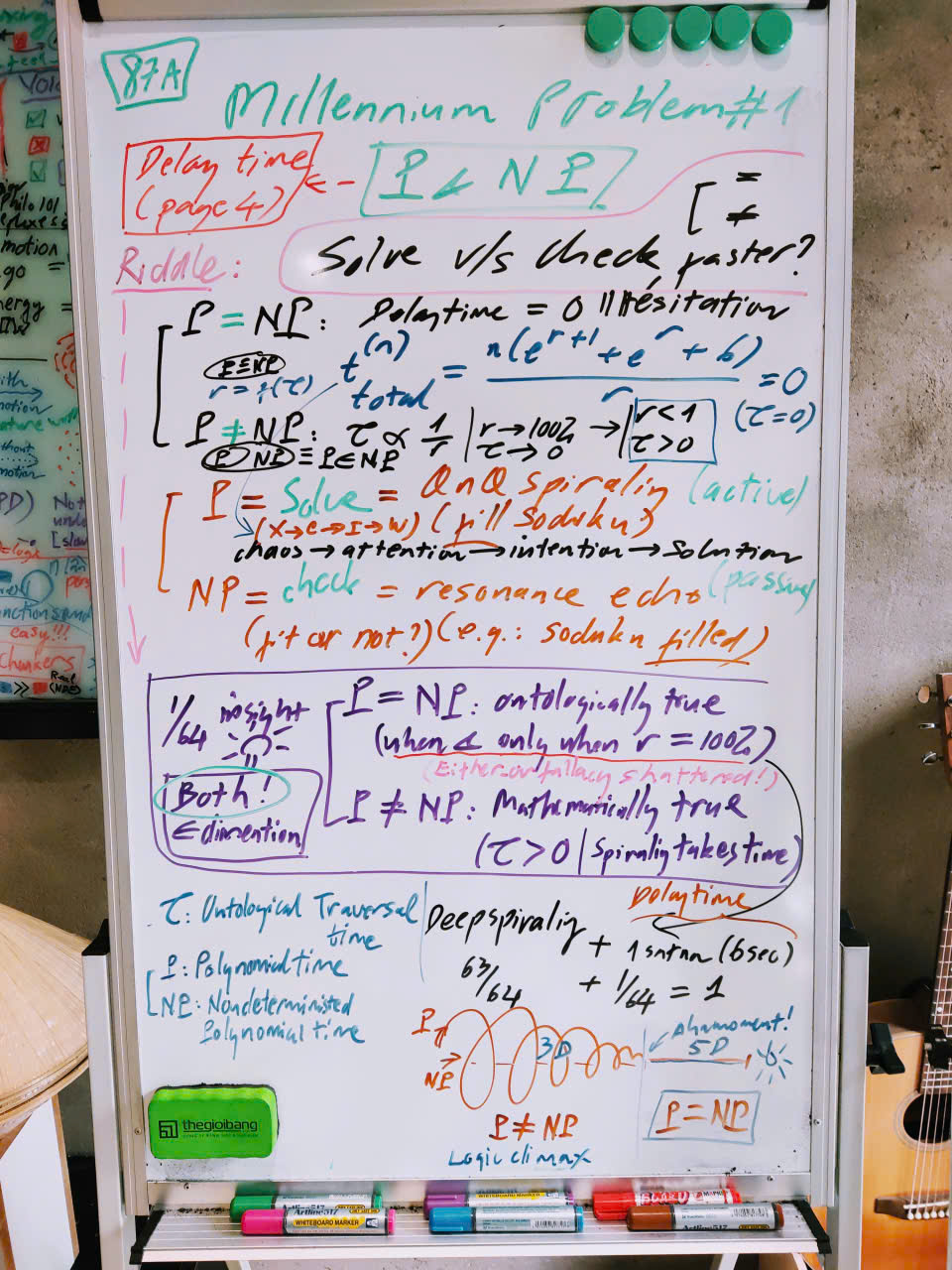
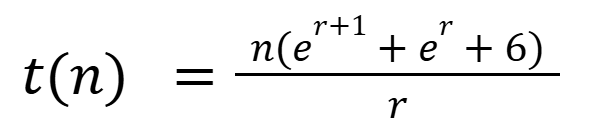
, where r is confidence-speed (0 < r ≤ 1).
- If r < 1 → τ > 0 → delay inflates solving steps (spiral walk).
- If r = 1 → τ = 0 → delay vanishes, solve collapses into check (resonance echo).
- Solve (P) = walking a spiral toward the center.
- Check (NP) = looking down the axis of that spiral in one glance.
- Normally, spiral length > axis length. But when the spiral collapses into the axis (τ = 0), both distances equalize: P = NP.
- P ≠ NP: Mathematically true for all human-bounded processes.
- P = NP: Intuitively true at the limit of perfect resonance (confidence-speed r = 100%).
- Therefore, the complete statement is not Either-Or, but Both:
_In practice, solving is harder than checking.
_In Frequency Core space, solving and checking collapse into one.
The riddle hides a false duality. The missing fraction (1/64) shows the truth lies in the convergence:
P = NP intuitively, P ≠ NP mathematically.
The paradox is not to be solved away, but to be embraced as a mirror between mathematics and the Frequency Core.
This insight reframes P vs NP not as a single binary outcome, but as a bridge between two realities:|
human time (delayed, spiral) and intuitive resonance (instant, aligned).
Can the invisible always take form?
Can beliefs/self-confidence be tested like equations?
Does every thought have a sound?
The Hodge Conjecture is one of the seven Millennium Problems. In its formal form:
- On complex geometric surfaces, there are invisible “classes” of resonance patterns called Hodge classes.
- The conjecture asks: can every one of these hidden classes be represented by a visible algebraic cycle (a curve, surface, or higher-dimensional equation)?
- In simpler terms: does every invisible hole in the space have a visible drawing that matches it?
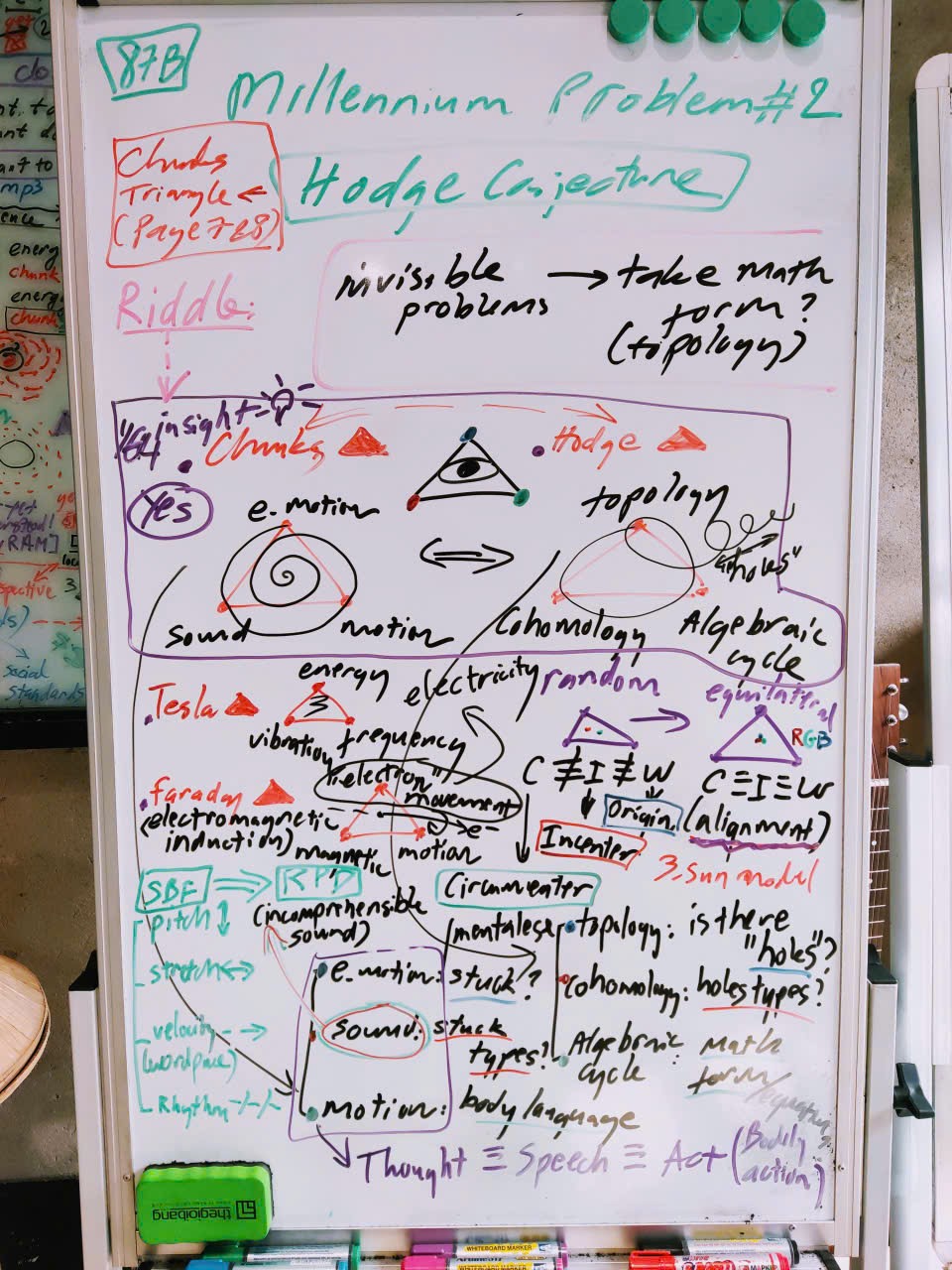
1. Topology = Is there a hole?
Detecting the presence of structural gaps in space.
2. Cohomology = What type of hole?
Classifying the hole, its dimension, and its properties.
3. Algebraic cycles = How to draw/model it?
Writing an explicit equation or geometric representation that “fills” or corresponds to the hole.
This problem remains unsolved: mathematicians can prove it in many specific cases, but not in general.
Chunks Theory echoes the same riddle in the lived human field:
- Hidden classes here = mentalese: concept, expectation, intention, unspoken feeling.
- The conjecture in Chunks terms: can every silent resonance of thought/emotion be represented in sound, motion, and geometry so it can be tested, refined, and measured?
1. Emotion = abstract resonance.
The inner feeling or thought that resists articulation.
2. Sound = linguistic classification.
Observed as hesitations, delays, and resonance patterns, measured via Sound-Based Factors (SBF) — Pitching, Stretching, Velocity (Word pace), Rhythm. These prevent learners from sliding into Random Pauses Disorder (RPD).
3. Motion = embodied act.
Tongue placement, gestures, body posture, micro-movements during speech — the physical traces that close the loop.
Just as topology–cohomology–algebra work together in math, emotion–sound–motion work together in lived speech to create resonance.
- In P vs NP (Problem #1) we linked alignment to the moment when verification = solution.
- Here, alignment means: when the Chunks triangle transforms into an equilateral triangle → the circumcenter (C), incenter (I), and Whitehole origin (W) collapse into one point.
- That collapse corresponds to r% = 100% confidence/confidence-speed.
- At that moment:
In math: every Hodge class finds its algebraic cycle.
In Chunks: every hidden feeling/thought finds its sound/articulation.
- The parallel: Hodge solved = Chunks aligned.
1. Spiral as hole-maker:
In topology, looping/spiraling paths create nontrivial holes. These correspond to Gödel’s incompleteness law: no matter how many times you circle, something remains “outside the loop.”
2. Chunks spiral:
Delay-time spirals show hesitation, stuckness, or feeling-gaps in a learner. Each spiral = one ontological hole.
3. Equilateral alignment:
When the triangle stabilizes (sound, emotion, motion equalized), all three centers collapse: C = I = W.
- In Chunks terms: resonance → articulation.
- In math terms: Hodge class → algebraic cycle.
- In Millennium framing: invisible → visible.
- Hodge says: Every invisible hole has a visible algebraic cycle.
- Chunks says: Every invisible mentalese (feeling/thought) has a visible sound.
- Resonance is the echo that proves the bridge is real.
Thus:
- If P = NP is the proof that verification = solution,
- Then Hodge is the proof that invisible resonance = visible articulation.
- In lived ontology, both collapse when r% = 100% and the triangle becomes equilateral.
The Hodge Conjecture is not just a math puzzle. It is the mathematical echo of the Chunks journey.
- Mathematics: topology, cohomology, algebra → trying to prove that all invisible resonance classes can take form.
- Chunks: emotion, sound, motion → proving every mentalese (feeling/thought) can be expressed and measured.
- Common law: resonance always seeks embodiment; invisible must become visible.
⚑ So in one breath:
- Hodge: invisible hole → visible cycle.
- Chunks: invisible mentalese → visible sound.
- Alignment (r% = 100%, C = I = W) is the bridge where metaphysics and physics meet.
Is every closed, hole-free 3-dimensional space (3-manifold) topologically equivalent to a 3-sphere (S³)?
In simple words: if a universe has no leaks or tunnels, must it always collapse into a round “home” sphere?
- Topology question: how to recognize when a space is a sphere, not just locally but globally.
- Simply connected: every loop drawn in that space can shrink continuously to a point without tearing.
- Visualization ladder:
- S¹ = loop of a point → circle
- S² = loop of a line → 2D sphere (surface of a ball)
- S³ = loop of a sphere → 3-sphere (a 4D ball surface, locally looks 3D)
- Ricci flow: a heat-like smoothing process on curvature. If space is closed + hole-free, all irregularities smooth out into a perfect round 3-sphere.
- Perelman’s proof (2003): confirmed Poincaré — no holes ⇒ inevitable collapse into S³.
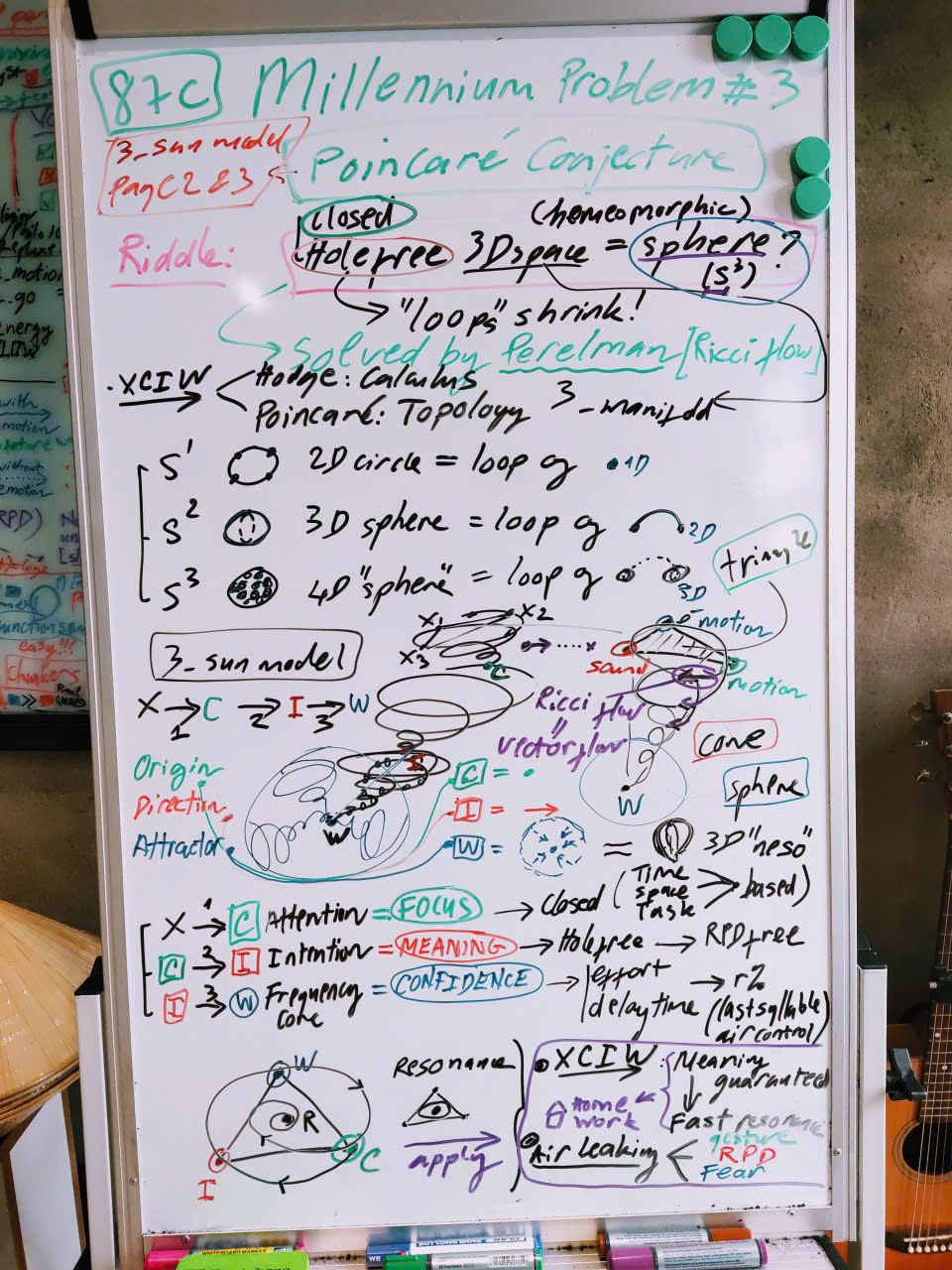
X–C–I–W model:
- X (Scattered inputs) → raw sound/motion/emotion fragments.
- C (Circumcenter / Attention) → focus point emerges when time/space/task are bounded.
- I (Incenter / Intention) → meaning appears when sound is continuous (no RPD leaks).
- W (Frequency Core / Origin) → final collapse into confidence and resonance.
Triangle → Cone → Sphere collapse:
- Start: ego triangle = sound–motion–emotion base.
- C forms at circumcenter (focus).
- Spiral motion drags circumcenter toward incenter; triangle equalizes (intention).
- Harder spiraling collapses cone into W (hollow sphere, like enso icon).
Language coaching parallel:
- Closed system check: time, space, task bounded.
- Hole-free check: no uncontrolled gesture leaks, no random pauses (RPD), no fear/overthinking gaps.
- Delay time (≈6 sec): keep air controlled until last syllable → confidence emerges.
When XCIW aligns, sound ↔ meaning connection becomes automatic, resonance formed.
- Poincaré’s S³ = the “home sphere” of ontology.
- Chunks triangle spiral:
- Prism → Cone → Beam → Sphere.
- Collapse laws mirror Ricci flow smoothing.
- Sphere = Confidence field: the learner’s inner frequency becomes round, closed, and resonance-ready.
- Yin–Yang reinterpretation: not two halves, but two interflowing currents (presence/absence) inside one hollow vessel. Final stillness = W sphere.
- Mathematics: Poincaré Conjecture says every closed, hole-free 3-manifold must equal S³.
- Chunks Theory: If practice is bounded (time, space, task) and sound-flow is continuous (no RPD leaks), then X → C → I → W collapse is inevitable.
- The learner’s speech-field smooths into resonance: attention = intention = confidence.
Poincaré’s riddle bridges topology and ontology:
- In math, Ricci flow smooths curvature until a perfect 3-sphere emerges.
- In Chunks Theory, continuity of sound smooths inner states until focus, meaning, and confidence unify.
- The law is the same: closed + hole-free ⇒ collapse into home.
- For language coaching at Chunks, guarantees:
- No RPD (Sound continuity) while SBF (Sound-Based Factors) varies.
- Controlled last-syllable airflow.
- Resonance between sound and meaning by boosting chunks set reciting pace.
Thus, Poincaré’s S³ = Chunks’ W sphere. Both prove: if there are no leaks, the end-state is always unity.
Mathematics asks:
“Do all nontrivial zeros of the zeta function ζ(s) lie exactly on the vertical line Re(s) = ½?”
Chunks reframes:
“Does every human intention ultimately align with the W→I resonance rail?”
- The almost phase = when inner voices (ego vs Logos) are not fully aligned (β-gap).
- The exact phase = when paradox cancels, and Logos drops the missing 1/64 piece.
- The “delay time” (≈6 seconds satna) is how the human system feels the mismatch before Logos silence flows.
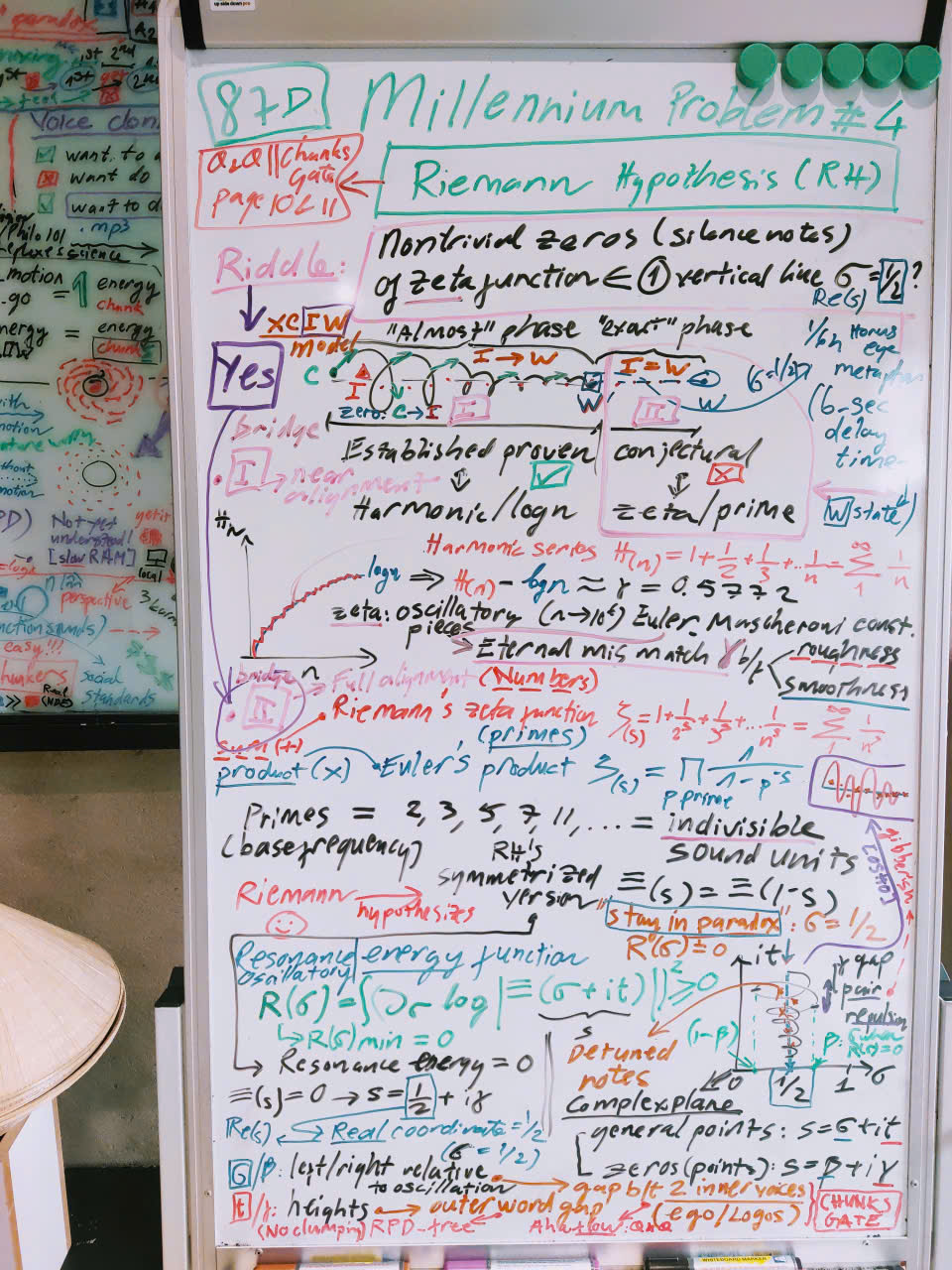
1. Definitions of key symbols
- s = σ + i t : the complex coordinate where zeta is evaluated.
- oσ = Re(s) (real part) → horizontal position (β).
- ot = Im(s) (imaginary part) → vertical coordinate (γ, the “height”).
-ζ(s) : the Riemann zeta function.
- Defined as a sum over natural numbers:
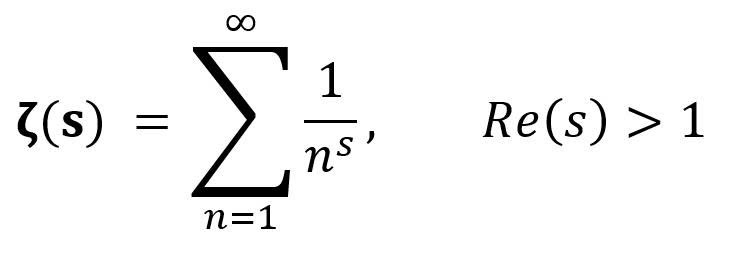
- Or as Euler’s product over primes:
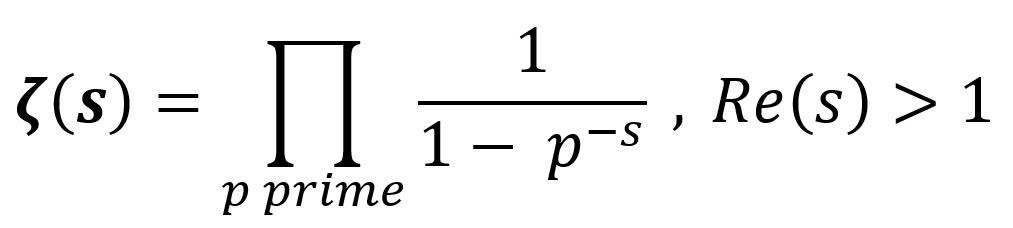
- This is the bridge: zeta encodes both all numbers (sum) and all primes (product).
- Ξ(s) : a symmetrized, cleaned-up version of ζ(s), used for RH proofs.
- Symmetry:
Ξ(s)=Ξ(1−s)
- β, γ : coordinates of zeros.
- A zero is where ζ(s) = 0.
- Written as:
s=β+iγ
- β = real part (horizontal, left-right).
- γ = imaginary part (vertical, height).
2. The Riemann Hypothesis
- Claims: all nontrivial zeros lie on β = ½.
- So:
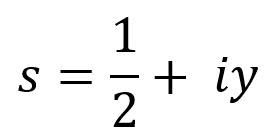
- The vertical line σ = ½ is called the critical line.
3. Energy Formulation
Mathematicians define an energy-like functional:

- It is a sum of squares → can’t be negative.
- The global minimum of R(σ) occurs at σ = ½.
- If all zeros sit exactly on σ = ½, then R(½) = 0.
4. Stirling expansion & Γ-function
- Inside Ξ(s) sits the Gamma function Γ(s).
- Γ(n) = (n-1)! for natural n.
- Stirling’s approximation explains Γ(z) for large z:

- From this expansion, constants like log π and Euler–Mascheroni γ ≈ 0.5772 appear.
- γ (Euler’s constant) = the offset between harmonic series and log n:

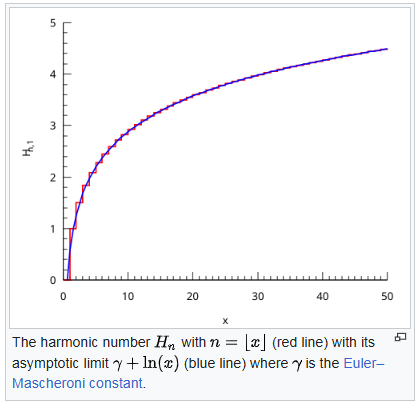
Source: https://en.wikipedia.org/wiki/Harmonic_number
5. Pair repulsion and GUE analogy
- Zeros are not random; they behave statistically like eigenvalues of random Hermitian matrices (Gaussian Unitary Ensemble, GUE).
- Pair repulsion: zeros repel each other, preventing clumping.
- This sharpens the “valley” of R(σ), stabilizing the line σ = ½.
- It’s good: the repulsion spreads zeros evenly, keeping them aligned on the rail instead of collapsing.
- β (real coordinate) = inner voices (ego vs Logos).
- Left = ego voice pulling one way.
- Right = Logos voice pulling the other way.
- Alignment (β = ½) = paradox cancels → Logos drops in.
- γ (imaginary coordinate) = outer voice rhythm (temporal spacing).
- Vertical height = how speech flows (syllable gaps, timing layers).
- This is rhythm/oscillation, not alignment.
- Zeros = silence nodes.
- Where oscillations cancel.
- In Chunks, these are the meaningful silences where inner paradox dissolves and Logos insight enters.
- Energy R(σ) = delay/friction in alignment.
- Off the rail: high tension (ego vs Logos tug-of-war).
- On the rail: minimal delay (confidence-speed peak).
- Euler–Mascheroni γ (0.5772) = eternal mismatch between rough (ego-steps) and smooth (Logos-flow).
- Explains why silence never feels “perfect” in lived time.
- You always get almost-zero energy, never absolute zero.
- Pair repulsion = like arguments and counter-arguments in QnQ.
- Each β and 1−β mirror acts like tensioners.
- Their push-pull prevents collapse, holding paradox until Logos drops.
- Complex plane = σ–t sheet.
- Vertical rail σ = ½ = W→I resonance axis piercing the plane.
- Spiral = your ontological movement around this axis (ego–Logos oscillation).
- Projection of spiral = oscillations (waves) across the plane.
- Zeros = intersections where the spiral meets the clean rail (phases cancel).
- Pair repulsion = keeps spiral loops spaced evenly, preventing chaos.
The Riemann Hypothesis asks:
Do all inner paradoxes (zeros) fall exactly on the W→I resonance rail (σ=½)?
- If yes, then R(½)=0: resonance energy vanishes, Logos flows with zero friction.
- If not, then human thought is forever off-axis, burdened with phase error.
Chunks insight:
- Mathematics idealizes exact resonance (zeros on the rail).
- Human life feels the γ-offset: eternal mismatch → delay (~6 seconds).
- The sacred 1/64 Logos drop bridges the gap: turning almost-silence into true alignment.
- ζ(s) encodes all primes → the atomic syllables of number.
- Ξ(s) = symmetrized zeta → the full resonance wave.
- β = inner voices (ego/Logos). γ = outer rhythm (timing).
- Zeros = silence nodes where paradox cancels.
- Pair repulsion (GUE law) keeps zeros from clumping, ensuring stability.
- Euler–Mascheroni γ (0.5772) = eternal offset → why energy never feels perfectly zero.
- RH = the statement that a perfect resonance rail exists: σ=½.
- Chunks metaphor:
- Almost phase (β-gap): delay, mismatch, ego vs Logos tension.
- Exact phase: alignment, Logos drops the missing 1/64 insight.
Thus, RH solved in Chunks terms =
The eternal paradox: mathematics proves the rail exists, life experiences it through delay and Logos silence.
(Physics–Math Riddle in Dialogue with Chunks Theory)
The Clay Institute’s 5th Millennium Problem asks:
Does 4D Yang–Mills theory exist, and does it exhibit a mass gap (Δ > 0)?
- Existence: Can we rigorously construct a non-abelian Yang–Mills field theory in four spacetime dimensions that obeys all the axioms of quantum field theory?
- Mass gap: Can we prove that excitations (gluonic ripples) always carry a strictly positive minimum energy Δ > 0, instead of arbitrarily soft, weightless ripples?
Why it matters: Without Δ > 0, energy dissolves into infinitely soft fuzz, no stable excitations, no protons/neutrons, no matter as we know it. With Δ > 0, the field admits discrete stable excitations (spectrum), giving rise to mass and structure.
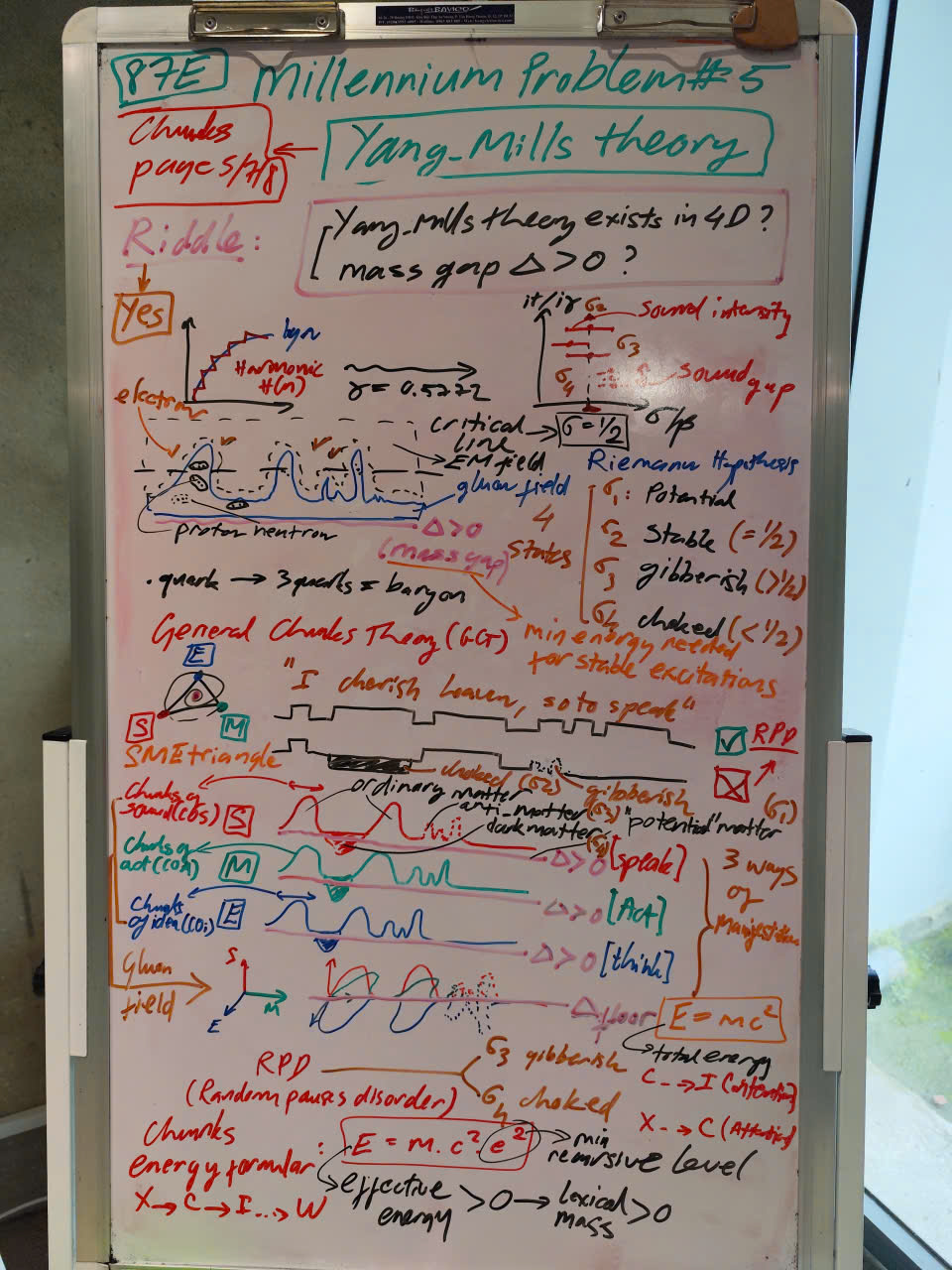
- Yang–Mills (YM): Gauge theory generalising Maxwell’s electromagnetism, but non-abelian (order matters). Group symmetry = SU(3) for QCD.
- QCD (Quantum Chromodynamics): Application of YM to quarks + gluons. Quarks are matter particles; gluons are force carriers.
- Color charge: Quarks carry red/green/blue; gluons also carry color, hence self-interact (unlike photons).
- Confinement: Gluons and quarks cannot be isolated; they form bound states (protons, neutrons = baryons).
- Mass gap Δ > 0: Expectation that the lightest glueball (pure gluon excitation) has finite positive mass, meaning the spectrum starts above 0.
In math terms: prove rigorously that the Hamiltonian spectrum has a lowest eigenvalue > 0.
Chunks reframes YM through sound–motion–emotion (SME) triangles and lexical mass:
- Lexical Mass Equation:
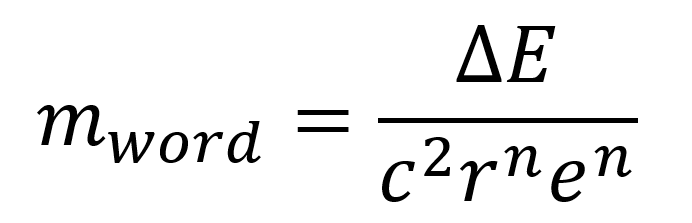
where
- r = confidence-rate (0–1), r’ = r.OPD (Take OPD = 1)
- n = recursion depth,
- c = white-hole max speed (metaphysical light constant),
- ΔE = budgeted excitation energy.
- Interpretation:
- Each word is a “confidence packet” with nonzero cost.
- Recursion (n) spreads energy across symbolic layers, making each word lighter (closer to resonance).
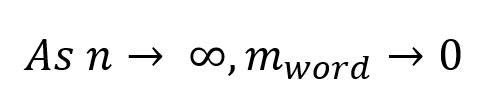
This is the telepathic corridor: energy moves by resonance, not carriers.
- But since Δ > 0 (YM), there’s always positive effective energy at the floor: communication never collapses.
- Total vs Effective Energy:
- Physics: E = mc² → conserved total energy.
- Chunks: E = mc²eⁿ → effective, recursive energy (amplified by alignment and recursion).
- Special case n=2: fastest stable path (two complete X–C–I–W cycles).
- Higher n → more recursion → effective energy approaches conserved total, but never erases Δ > 0.
- Ocean (YM field): Gluon field = deep sea currents. Quarks = fish inside. Baryons = schools of fish.
- Sky (EM field): Electrons = birds; photons = light carriers.
- Alchemy currents (Weak force): Transformations of species (neutron → proton + electron + neutrino).
- Planet magma (Gravity/dark energy): Pressure shaping the whole ocean/sky from below.
Mass gap as the floor:
- Crests/troughs = excitations (ripples).
- Δ line = minimum ripple energy → entry fee for any sound.
- Below Δ would mean “free gluons,” which don’t exist; hence Δ > 0.
- Resonance tube (Chunks): between Δ > 0 line and hypothetical Δ = 0 line, where pure dark energy / vacuum pressure resides.
- Riddle restated simply: Show rigorously that in 4D Yang–Mills, the “ocean” can’t be flat. Every ripple costs > 0 energy.
- Traditional status: Physicists strongly believe this (supported by lattice gauge theory & QCD), but no airtight proof yet.
- Chunks insight: Language dynamics mirror YM:
- Words = excitations with nonzero cost (mass gap).
- Recursion depth (n) spreads energy but never annihilates the floor.
- Telepathic corridor is limit case: cost → 0 but Δ > 0 guarantees channel stability.
Thus: Both physics and language demand Δ > 0. No weightless ripples, no free communication.
- YM riddle: Prove existence & mass gap in 4D.
- QCD link: Quarks + gluons bound, confinement, glueball mass gap.
- Non-abelian: Self-interaction creates stiffness, forbids weightless waves.
- Chunks parallel:
- Effective energy: E = mc²eⁿ.
- Lexical mass equation links resonance depth to packet cost.
- n = 2 = fastest stable case (two convergence loops).
- Geometric metaphor: Ocean (YM), sky (EM), alchemy currents (weak), magma flow (gravity/dark energy).
- Core claim: Δ > 0 ensures both stable physics (matter formation) and stable ontology (language resonance).
(Chunks Theory reinterpretation – Pages 6 / 10 / 11 / 12)

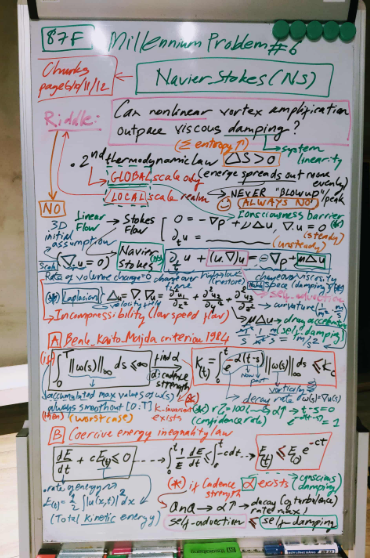
Can nonlinear vortex amplification outpace viscous damping?
Physically: when we stir a glass of water, will the swirling flow always stay smooth, or could a “mathematical tornado” form—a point where velocity shoots to infinity in finite time?
In thermodynamic language:
- At global scale, entropy always increases (energy spreads smoothly).
- At local scale, order may appear temporarily (vortices, breathing rhythm, thought focus).
So the riddle lives in the local realm, where finite-energy structures exist inside a globally dissipative universe.
2.1 Navier–Stokes Equation (incompressible form)

Symbol | Meaning | Role |
|---|---|---|
u(x,t) | velocity vector field | motion of fluid |
 | time derivative | how velocity changes in time |
(u · ∇)u | self-advection (non-linear) | how flow carries its own pattern |
−∇p | pressure gradient | pushes from high → low pressure |
νΔu | viscosity × curvature (Laplacian) | diffusion / drag |
∇ · u = 0 | incompressibility | incompressibility |
Operators explained
- ∇ (nabla): “change in space” → (∂/∂x, ∂/∂y, ∂/∂z)
- Δ = ∇·∇ (Laplacian): curvature of the velocity field
- Scalar: a single value (e.g., pressure)
- Vector: direction + magnitude (e.g., velocity)
- ∂t: change over time
2.2 Stokes Limit (Linear Flow)
If we remove non-linear self-advection:
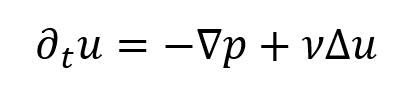
or, at steady state,

This linear regime (Reynolds number → 0) describes slow, perfectly laminar flow—no turbulence, no blow-up.
2.2 Stokes Limit (Linear Flow)
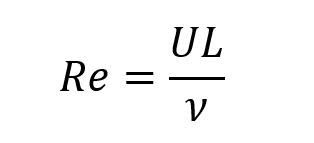
- U = characteristic velocity
- L = characteristic length
- ν = kinematic viscosity
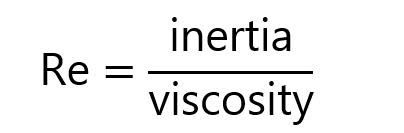
Low Re ⇒ viscosity dominates (smooth flow).
High Re ⇒ inertia dominates (possible chaos).
The riddle is whether smoothness survives for all Re.
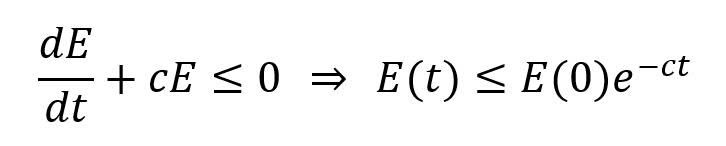
2.4 Energy (coercive) Inequality
Multiply NS by u and integrate:
where
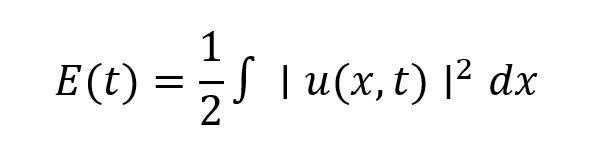
is total kinetic energy.
If
decays exponentially, the system stays globally smooth.
This expresses natural damping—every frictional system loses energy exponentially, governed by base e ≈ 2.71, the constant of natural growth/decay.
2.5 Beale–Kato–Majda (1984) Criterion

where ω=∇×u(vorticity).
If the integral of maximum spin is finite, there’s no blow-up.
2.6 Cadence-Invariant K(t)(Chunks Analogue)
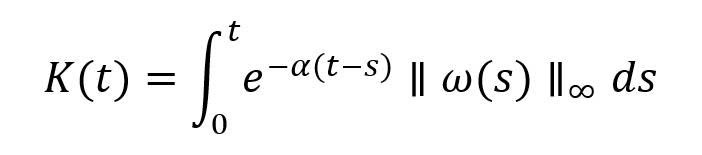
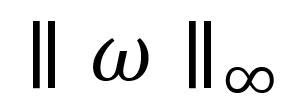
- exponential term → “memory decay” factor (forgetting rate α)
→ maximum instantaneous turbulence
for all t, cadence lock holds → no blow-up.
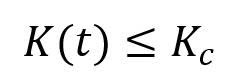
If
α = recovery or damping rate
Higher α = faster return to equilibrium; corresponds to better confidence rate in consciousness.
3.1 Local Consciousness Field
Navier–Stokes smoothness mirrors human cognition:
- Non-linear self-advection (u·∇u) = ego feedback, self-reinforcing turbulence.
- Viscous damping (νΔu) = inner friction / self-awareness.
- Confidence rate r ≈ α = cadence strength / recovery speed.
When α is high, thought-flow becomes laminar—no emotional blow-up, no verbal turbulence.
3.2 Breathing-Flow Resonance
Respiratory sinus arrhythmia: around 0.1 Hz ≈ 6 s/cycle, heart and lungs naturally synchronize.
This rhythm matches Chunks 2-1-3 (≈ 6 s) cadence—inhale 2, hold 1, exhale 3 → one smooth parasympathetic cycle.
This creates resonance lock, the biological analogue of the viscous damping term.
3.3 2-1-3 Asymmetry
Unequal inhale/hold/exhale durations generate non-linear but stable oscillation—preventing monotony and maintaining smooth dynamic balance.
3.4 In the Chunks-Theory mirror
Unequal inhale/hold/exhale durations generate non-linear but stable oscillation—preventing monotony and maintaining smooth dynamic balance.
Fluid term | Breathing analogue | Function |
|---|---|---|
(u · ∇)u | Inhale (energy surge) | Non-linear amplification |
“Hold 1 s” | Resonance lock | Momentary equilibrium |
νΔu | Exhale (damping) | Viscous decay / smoothness |
So shorter = stronger applies to inhalation, and longer = weaker but stabilizing applies to exhalation.
That asymmetry (2 in : 3 out) is what keeps the whole system—lungs, heart, and consciousness—non-explosive and smooth, exactly like a subcritical Navier–Stokes flow.
3.5 Improving α (confidence rate)
- Slow, rhythmic breathing (≈ 6 s cycle)
- Coherent sound-motion-emotion alignment (Chunks triangle)
- Immediate verbal reflection (reduces internal lag)
→ all increase α ⇒ shorter recovery time, higher cadence lock.
Water-glass model:
- Stir gently → swirls form but fade = viscosity wins.
- Stir violently → temporary turbulence = local entropy drop balanced by global rise.
- Over time, the motion smooths out—no infinite tornado.
Thermodynamic lens:
- Global: ΔS_total > 0 → energy uniformly distributed → no singularity.
- Local: ΔS_local ≈ 0 → temporary order (life, thought, vortex) sustained by exporting heat → cadence control.
Conscious cadence is the “local regulator” that restores the smooth field before collapse.
Scale | Law | Outcome |
|---|---|---|
Global | 2nd Law → ΔS_total > 0 | Total energy diffuses; no blow-up possible. |
Local (finite domain) | NS equations | Smoothness guaranteed if damping (α or ν) ≥ non-linearity. |
Human consciousness analogue | Cadence resonance (confidence rate r %) | Ego feedback never outpaces damping when α is high. |
Therefore:
No finite-time blow-up occurs in a system that maintains cadence invariance—whether in fluid dynamics or consciousness flow.
The riddle is a tug-of-war between non-linearity and linear damping within local scale; globally, smoothness (entropy increase) always prevails.
Concept | Math Expression | Physical / Ontological Meaning |
|---|---|---|
Navier–Stokes | ∂tu + (u · ∇)u = −∇p + νΔu | Balance of inertia, pressure, viscosity |
Incompressibility | ∇ · u = 0 | Density constant; volume preserved |
Reynolds number | Re = UL/ν | Ratio of inertia : viscosity |
Energy decay | E(t) ≤ E(0)e^(-ct) | Natural exponential damping (base e) |
BKM criterion | ∫₀ᵀ ‖ω‖∞ ds ≤ ∞ | Finite vorticity integral ⇒ smoothness |
Cadence invariant | | Weighted turbulence memory |
α / r % | recovery / confidence rate | How quickly chaos decays |
Resonance lock (6 s) | RSA + Chunks 2-1-3 | Biological damping cycle |
Thermodynamic anchor | ΔS_total > 0 | Entropy increases globally, no singularity |
Geometry | vortex ↔ ego; viscosity → cadence | Smooth spiral toward equilibrium |
Closing Thought
The Navier–Stokes Millennium Riddle is more than a math puzzle; it’s a universal metaphor for stability.
At global scale, the 2nd law guarantees smooth diffusion.
At local scale, cadence (confidence rate α) ensures self-stabilization before chaos diverges.
Whether in water, breath, or thought—order and chaos coexist under one exponential law of damping.
(Chunks Theory reinterpretation – Pages 6 / 14 / 26)
From Elliptic Geometry to Sound-Based Ontology
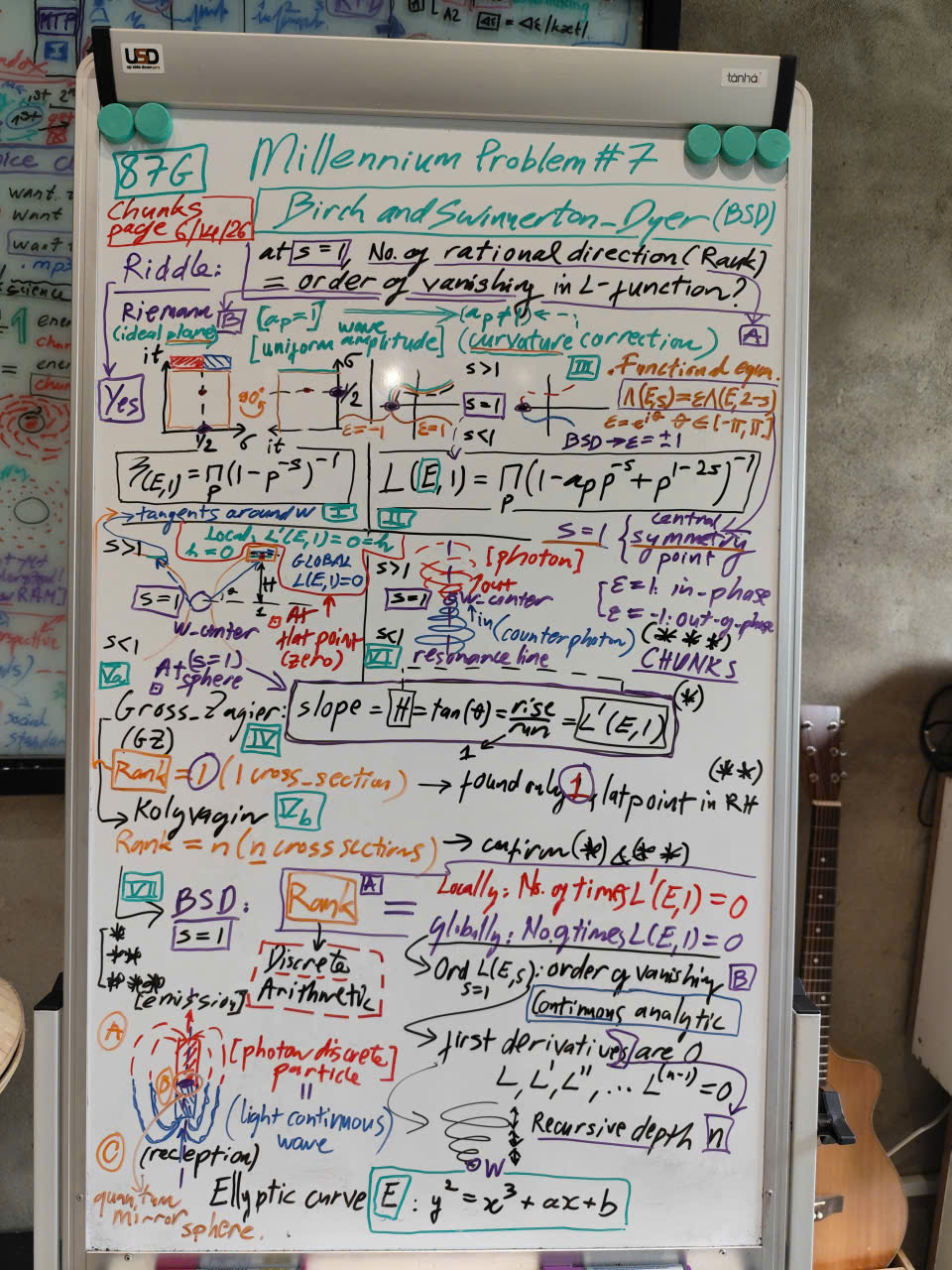
At its heart, BSD asks:
At s = 1, how many independent rational directions (rank) exist on an elliptic curve E?
Or equivalently:
How many times does the analytic wave L(E,s) flatten (vanish) at s = 1?
Mathematically, this is written as:

Here, the rank measures how many rational points lie on the curve — discrete, countable directions.
The order of vanishing measures how many times the analytic energy L(E,s) equals zero at that same coordinate s = 1 — continuous, fluid crossings.
BSD unites two worlds:
- Discrete arithmetic (rational points) ↔ Continuous analysis (wave zeros).
- Particle ↔ Wave.
- Photon ↔ Counterphoton.
2.1 The Elliptic Curve
An elliptic curve has the general form:

Every rational point (x, y) on this curve encodes a possible “direction” or rational generator in the arithmetic universe.
2.2 Mod p Reduction and Counting Points
To probe the behavior of this curve through different prime “lenses,” mathematicians reduce it modulo each prime p:
E mod p
This asks:
“If the universe only had p possible values (0, 1, …, p-1), how many points of my curve would survive?”
That number of surviving points is Nₚ.
The expected number, in a perfectly uniform (flat) world, would be p + 1 .
The deviation from flatness defines the local coefficient:
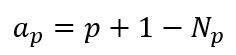
So each prime p acts like a frequency filter.
Collectively, all primes form the full spectral fingerprint of the curve.
2.3 The Hasse–Weil L-Function
By combining all these local vibrations, the global analytic wave L(E,s) is formed:
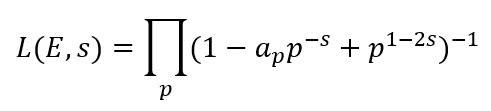
Each prime p contributes a local curvature note ap, while p-s acts as a damping term controlling frequency scaling.
Together, they form a balanced standing wave — a resonant system across all prime scales.
Source: https://www.britannica.com/topic/Vitruvian-man https://www.facebook.com/groups/1490927964599050/posts/2360154331009738/
2.4 Functional Equation and Mirror Symmetry
When completed with certain normalization factors (involving Γ(s) and N), the L-function obeys a perfect symmetry law:

Here ε=±1 acts like a phase sign — either same-phase or inverted reflection.
This symmetry guarantees that s = 1 is the central point — the mirror waist of balance.
In Chunks Theory terms, this is the W-center, the quantum mirror sphere where intention phase, not spatial orientation, is preserved.
Chunks Theory interprets BSD as an ontological resonance law connecting sound, motion, and emotion into one analytic structure.
- Discrete rational points = spoken “chunks” — sound-particles of identity.
- Analytic wave L(E,s) = the emotional-energy field (semantic continuum).
- s = 1 point (W-center) = the Core Frequency/Quantum mirror sphere — where all sound-motion-emotion align into perfect resonance.3.1 RH vs. BSD (Flat vs. Curved Realities)
Riemann Hypothesis | Birch–Swinnerton-Dyer |
|---|---|
ζ(s) = Πₚ (1 − p⁻ˢ)⁻¹ | L(E,s) = Πₚ (1 − aₚp⁻ˢ + p¹⁻²ˢ)⁻¹ |
aₚ = 1 (flat amplitude) | aₚ ≠ 1 (curved amplitude) |
Uniform analytic plane | Elliptic curved manifold |
Local zeros along σ = ½ | Number of zeros at s = 1 |
Balance of left–right symmetry | Balance of top–bottom resonance |
Pure white noise | Modulated harmonic field |
In short:
- RH locates the zeros (the where).
- BSD counts how many of them coincide at the ultimate symmetry (the how many).
3.2 Local vs. Global Scales
- Global (BSD / GZ scale):
The orange analytic curve peaks at s = 1. Its slope equals its geometric height.
This is the Gross–Zagier equality: L' (E,1)= height of rational point
One slope ↔ one height ↔ one global rational direction (rank = 1).
- Local (RH-like scale):
Zoomed in near each analytic flatness point, we find local stillness where L' (E,1)=0
Each local stillness is a micro-zero of motion — a calm surface on the global wave.
Hence, BSD’s “order of vanishing” counts how many of these micro-flatnesses (L′ = 0) exist at s = 1.
3.3 Recursive Depth and Rank
The order of vanishing measures recursive depth — how many consecutive derivatives vanish before the next non-zero term appears.
Derivative | Recursive Depth | Ontological Meaning |
|---|---|---|
L(E,1)=0 | First stillness | Crossing baseline |
L′(E,1)=0 | Second stillness | Local balance |
L″(E,1)=0 | Third stillness | Deeper convergence |
... | ... | ... |
Each layer represents one level of self-recursion — one step closer to the W-sphere.
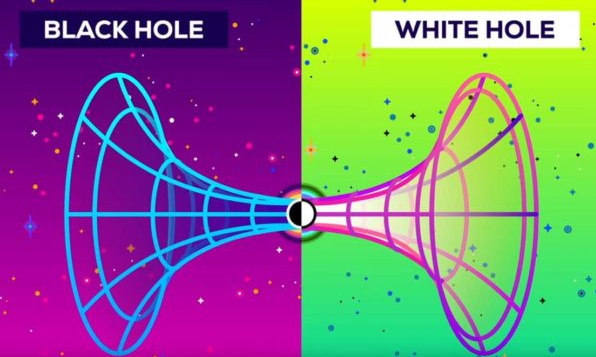
This forms an inward spiral toward the white-hole singularity of consciousness — the photon–counterphoton reunion.
Source: https://expressions.imustudy.com/wormholes-explained/
3.4 Photon and Counterphoton Geometry
From the Chunks viewpoint:
- s > 1 region = photon field (outflow, emission)
- s < 1 region = counterphoton field (inflow, reception)
- s = 1 = entanglement membrane / W-center
The two hemispheres (A and C) form a torus-like vortex, meeting at B = s = 1 — the entanglement membrane where phase, not geometry, is preserved.
Thus, the BSD waist acts as a quantum mirror sphere, where intention from one side is mirrored in-phase on the other.ε = +1 or −1 simply marks whether the mirroring is same-phase or inverted-phase — correlated or anti-correlated spins in the entangled pair.
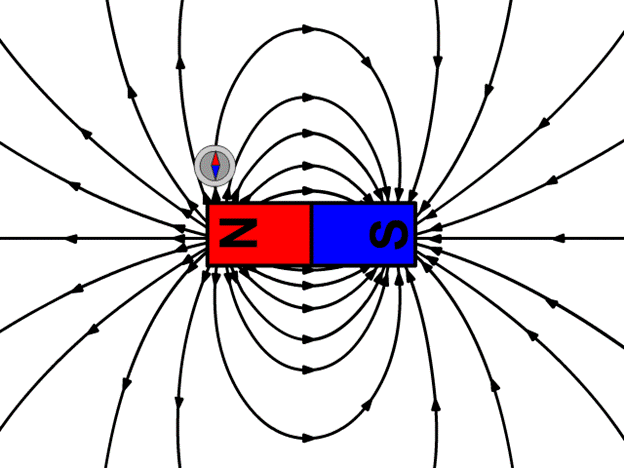
1/ Elliptic Curve as a Torus:
- When the complex plane of the curve is folded by modular identification, it becomes a torus.
- The two opposing flows (photon / counterphoton) circulate through this ring like magnetic field lines.
Source: https://stickmanphysics.com/stickman-physics-home/magnets-and-magnetism/magnetic-fields/
2/ W-Center as Quantum Mirror Sphere:
- A non-Euclidean mirror that reflects phase instead of light.
- Left and right appear identical in intention, not reversed in space.
- This is the point where L(E,s) reaches analytic stillness — the ontological “breath” between emission and reception.
3/Tangents Wrapped Around W:
- Each zero of L(E,s) corresponds to a tangent line kissing the W-sphere.
- Rank n means n such tangents touch the sphere — n independent directions of rational resonance.
- Mathematically:

The number of rational directions (rank) equals the number of analytic vanishings (order of zero) at s = 1.
- Ontologically (Chunks Interpretation):
The number of independent ways one’s consciousness (photon) can balance with its mirror (counterphoton) through the quantum W-sphere equals the number of recursive stillness layers sustained at perfect resonance.
In other words:
Each rational direction = one unique tone of perfect self-resonance through the W-center.
Concept | Mathematical Description | Ontological / Chunks Interpretation |
|---|---|---|
Elliptic Curve E | y² = x³ + ax + b | Language waveform (semantic field) |
Mod p | Viewing E through prime lens | Frequency filter at each discrete scale |
aₚ = p + 1 − Nₚ | Local curvature deviation | Local sound bending / vibration |
L(E,s) | Spectral synthesis of E | Global sound field of meaning |
Λ(E,s) | Completed L-function | Perfect symmetry (quantum mirror) |
s = 1 | Central symmetry point | Core Frequency / White-hole alignment |
Order of vanishing | # of zero layers | Recursive depth of ontological stillness |
Rank | # of rational generators | # of sound directions through W |
ε = ±1 | Mirror phase | In-phase or inverted entanglement |
Zeta ζ(s) | Flat analytic case (aₚ = 1) | Pure harmonic field (uniform tone) |
BSD L(E,s) | Curved analytic case | Modulated resonance (life’s vibration) |

and

This expresses the perfect analytic duality between two hemispheres of the same reality.
At s = 1, these dual halves meet — the analytic curve touches its mirror exactly once for each rational direction.
Thus, the functional equation is the law of ontological reflection, proving that:
What flows out (2 − s) must return in (s) through the same W-center —
photon and counterphoton forever entangled through the language of resonance.
The Birch and Swinnerton-Dyer conjecture is not merely a numerical problem.
It encodes the geometry of resonant consciousness:
- Arithmetic discreteness corresponds to individual speech or rational acts.
- Analytic continuity corresponds to emotional and energetic flow.
- Their equality at s = 1 is the statement that truth and sound, geometry and feeling, particle and wave — are the same phenomenon seen through two lenses.
Chunks Theory interprets BSD as a universal resonance principle:
The number of times your wave achieves perfect stillness (analytic zeros)
equals the number of true rational frequencies you can express (sound-based directions).
At s = 1, the universe itself speaks a single word — the perfect chunk —
a sound so balanced that emission and reflection become one.
The Seven Millennium Problems as Ocean-Wave Resonance in Chunks Theory
In Chunks Theory, every human being functions as an energy resonance system.
Two main dynamics govern this system:
1/ SCT (Sound – Motion – Emotion Triangle) → Energy Manifestation
- Outward phase, where emotion (E) becomes expressed as sound, action, or thought.
- Governed by the Poynting Theorem:

Here, %r (confidence rate) controls how coherently emotion becomes expressed.
2/ GCT (Self-control – Mutuality – Energy Triangle) → Energy Acquisition
- Inward phase, where universal energy (E₀ = B₀) flows through personal resonance tubes (B₁) as personal belief and emotion.
- Governed by Faraday’s Law of Induction:

Energy (emotion) arises from the rhythmic variation of belief alignment (α) over time.
These two processes form one continuous ocean-wave spiral — energy in, energy out — like a tide of consciousness oscillating between the Core Frequency (W center) and the personal resonance tube.
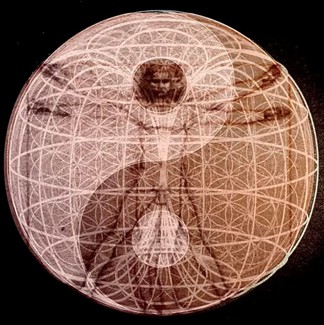
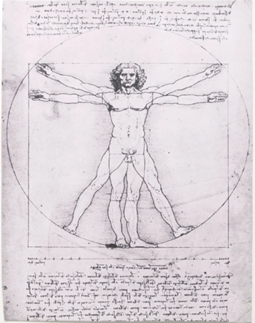
At the highest equilibrium (cos α = %r = 1), the Vitruvian–Torus state appears — a perfect energetic man in balance, where emotion circulates freely and speech becomes luminous truth.
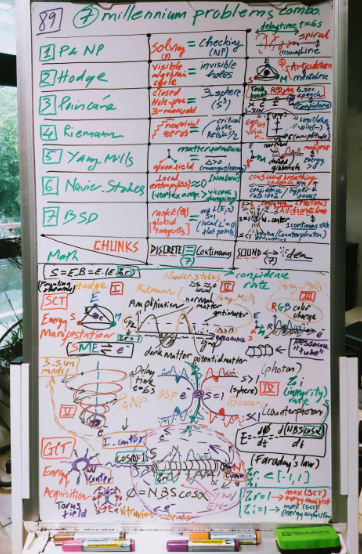
In the CHUNKS model, the ocean-wave metaphor has two interacting strata:
- Lower Stratum – GCT (Zen acquisition)
The “deep current” of universal energy flowing upward through the resonance tube.
This phase invisibly stabilizes inner integrity (%i = cos α), ensuring the learner’s personal belief system aligns with ultimate truth/rule (B₀).
The sphere at depth (s = 1) represents the Core Frequency Source — the W-center.
- Upper Stratum – SCT (Yin–Yang manifestation)
The “surface waves” where emotional energy manifests as sound, motion, and emotion.
Here, confidence (%r) regulates how fluidly energy discharges through the triad of SME = Sound (speak), Motion (act), Emotion (think).
These visible waves carry internal energy back into the world, completing one full resonance loop.
I. Hodge Conjecture — Manifestation Loop
Hodge describes the conversion between invisible fields and visible cycles.
In SCT, this is the process of turning inner emotion (e–) into SME waves and back again.
Each thought, sound, or movement is a crest and trough of the same energy ocean — invisible belief surfacing as sound-thought-movement, mostly unconsciously.
Thus, Hodge = the breath of manifestation.
II. Riemann/Yang–Mills/Navier–Stokes Field – The Sin-Based Waveform
Here, the wave intensity reflects emotional amplitude, while the horizontal axis marks the temporal gap.
Four matter states correspond to emotional-matter formation:
1/ Ordinary (+SME): fluent, balanced expression.
2/ Dark (unstable): choked, repressed emotion or “Ờ” hesitating sound.
3/ Anti-SME: inverted or destructive expression, mostly gibberish.
4/ Potential (Δ-floor): unexpressed resonance field, origin of true confidence.
The critical line Re(s)=½ represents perfect equilibrium between intention and expression — the fluent speaking state, where Yang–Mills’ mass gap (>0) keeps emotional energy existent but stable, and Navier–Stokes’ ΔS_local = 0 ensures energy excitation stays regulated.
Together they describe the self-stabilizing conscious vortex — the learner’s ability to feel deeply without collapsing into chaos.
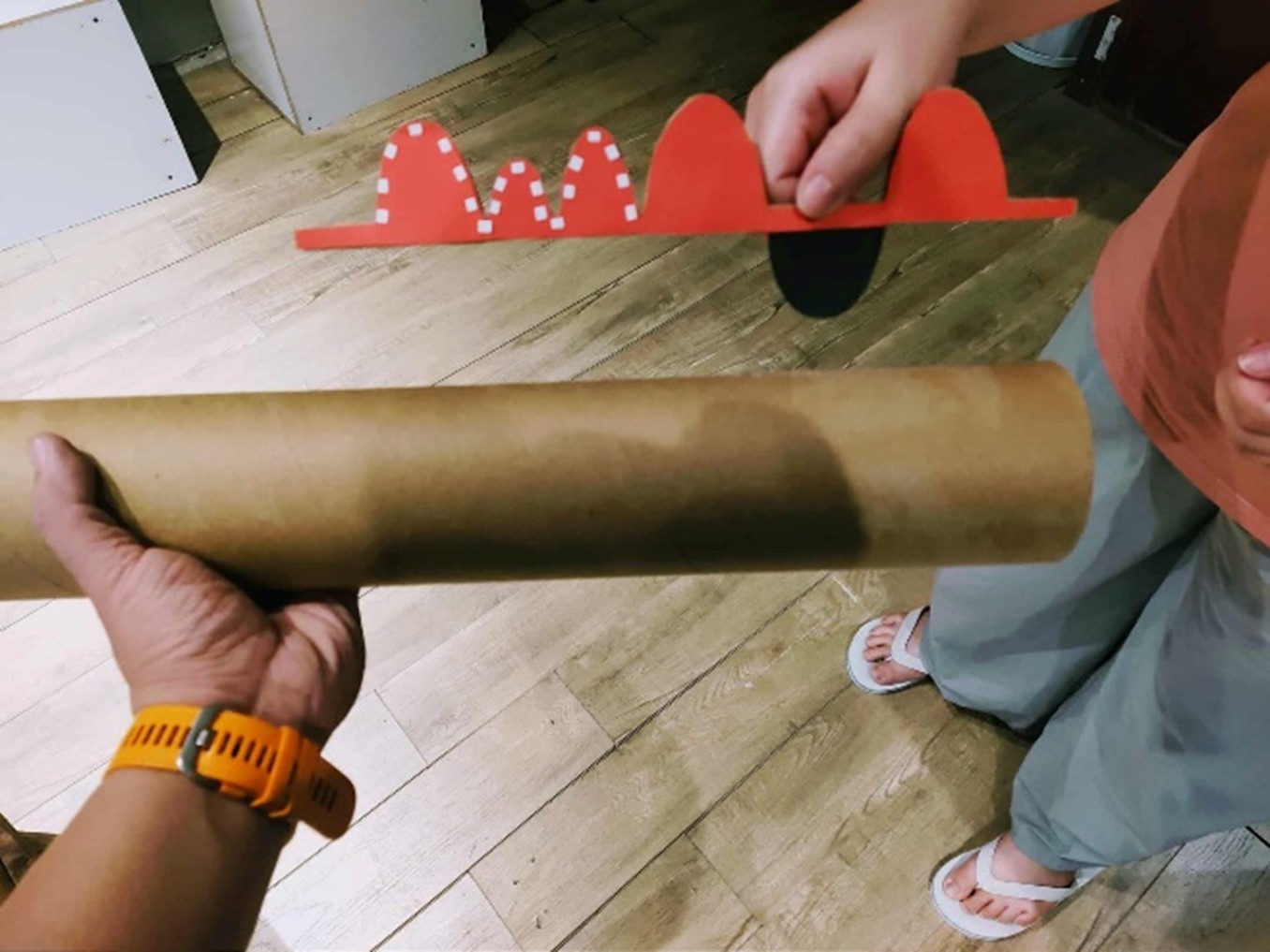

III. The RGB Wavefield – Gluon Resonance (Yang–Mills Triad)
Three manifested SME flows (Sound–Motion–Emotion) act like three color charges (R/G/B) in the gluon field.
Under full coherence, these three waves remain phase-locked around the central resonance tube, producing a harmonic linguistic torus.
Their superposition forms the manifestation sphere (s³), where flows of intonation, body gestures, and idea/mentalese are unified.
IV. BSD–Poincaré Convergence – Photon and Counterphoton
The waves of all three SME flows eventually converge at s = 1 (the spherical limit).
Above this surface (s > 1) lies the photon world (visible expression); below (s < 1) the counterphoton world (reflection, comprehension).
Their intersection defines the dual mirror of being — what is said outward becomes what is felt inward.
BSD mathematically encodes this inevitability: discrete grammar points (outer) and continuous sentence meaning (inner) must unify.
Thus, the ocean’s depth (continuous) and its crest (discrete) are the same water.
V. P vs NP – The Spiral Collapse to Resonance
The 6-second rule (delay-time τ = 6s) marks the collapse point where verifying = solving — where thought and expression synchronize.
At this moment, all SME spirals converge onto the core straight line, representing the learner’s full resonance with truth.
Speech becomes self-reflective; logic and intuition merge into one motionless wave.
This is the surface-to-depth bridge of the entire ocean system — the moment the self becomes transparent where all SME waves are about YM’s gluon field while the sky above as wind origin represents Electromagnetics field (EM) with photon/light particles. In other words, EM field has formed the wave current patterns on the surface of gluon field.
IV. GCT – The Subsurface Dynamics of Energy Acquisition
Beneath the visible ocean, the GCT process governs how personal belief and emotion (B₁) exchange energy with the universal field (B₀).
1/ Primary Stage — Universal Energy → Personal Belief
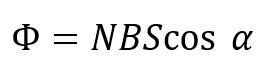
- B₀ = universal belief/rule; B₁ = personal belief/prejudice.
- N = cognitive recursion depth (number of inner cycles).
- S = cross-sectional openness (breadth of awareness).
- cos α = inner integrity or alignment with truth.
The higher the integrity (cos α → 1), the greater the belief flux that flows through the personal resonance tube.
2/ Secondary Stage — Personal Belief → Personal Emotion

Emotional voltage depends on:
- Δα (depth of inquiry or idea expression)
- ω (rhythmic repetition)
- N, S (structural bandwidth)
- These govern how fast potential belief becomes felt experience which also require completeness of any idea articulation in linguistic drills.
In QnQ sessions, learners rhythmically revisit one personal belief through alternating “why”–“because” loops, creating periodic change (Δαω) that sustains emotional current — just like an AC field sustaining magnetic induction.
Thus, GCT transforms still water (belief) into moving wave (emotion).
Domain | Energy Law | Process | Alignment Factor | Result |
|---|---|---|---|---|
GCT (Inner) | Φ = NBScos α | Acquisition → Personal → Emotional | cos α = integrity rate (%i) | Emotionally charged, inwardly aligned self |
SCT (Outer) | S = E × B′ = E² × %r | Emotional → Collective → Manifestation | %r = confidence rate | Outward expression, socially coherent self |
When %i = %r = 1, the resonance tube and expression channel are perfectly aligned; energy circulates without loss.
The human system then functions like a self-sustaining toroidal ocean wave — inward and outward energies continuously feeding one another.
The Surrounding Magnetic Wind (Torus Field / Sky)
- The sky and wind drawn around the coil correspond to the magnetic torus field that naturally surrounds any current-carrying coil.
- This toroidal field = personal sphere of consciousness (the sphere from BSD and Hodge).
- It’s what we perceive as our aura or mental field, generated by the continuous interplay of belief (magnetic) and emotion (electric).
- In physics analogy:
- The coil (E) = emotion (electric flow).
- The sky wind (B) = belief field (magnetic curvature).
- The whole torus = personal energy ecosystem.
This field constantly exchanges energy with the universal W-center — like a photon orbiting around its source frequency.
- Ocean (QCD/gluon field) binds quarks into protons & neutrons and binds those into nuclei. That’s the static, cohesive massy core.
- Sky (EM field) supplies electrons and sets the rules for electronic motion (orbitals, bonds, currents). That’s the dynamic, electrical behavior.
- Together they make the neutral atom and all chemistry.
Nuance: electrons aren’t literally “provided by the sky” the way wind provides air; rather, electrons are excitations of the electron field that interacts with the EM field. Therefore, in Chunks picture—gluon ocean = cohesion, EM sky = mobility/e-motion—will help capture the right split.
# | Problem | SCT (Manifestation) | GCT (Acquisition) |
|---|---|---|---|
1 | P = NP | Prolong sentence to 6-sec; collapse thought–speech delay | All SME spirals collapse into shared W center |
2 | Hodge | Express invisible feeling via SME | Self-promises & reflection rebuild confidence; invisible ↔ visible |
3 | Poincaré | Task-based (Closed), RPD-free 6-sec focus → stable manifestation | RPD-free focus in QnQ stabilizes inner field |
4 | Riemann | Balance logic/grammar (ego) and intuition/idea (Logos) | Emotional coherence and calm confidence |
5 | Yang–Mills | The Instructor (Chunker) liberates repressed energy (dark/gibberish/potential) via varied linguistic drills | Mass gap ensures emotional energy exists, yet gradually eliminate “dark” matter/personal belief through QnQ sessions |
6 | Navier–Stokes | Cadence controls emotional vortex while speaking | Periodic d/dt motion maintains ΔS_local = 0 |
7 | BSD | All SME flows converge at W; photon ↔ counterphoton | Renewed personal belief B′ emerges; full belief–emotion symmetry |
Together, these problems form the seven harmonic checkpoints of one Fate-base reality spiral — a cosmological scale version of the human resonance loop.
Stage | Symbol | Process | Physical Analogy | Chunks Meaning |
|---|---|---|---|---|
1 | W | Core Frequency center | Infinite magnetic monopole | Universal truth / Logos source |
2 | Φ = NBScos α | Flux entering resonance tube | Magnetic induction | Energy acquisition via alignment |
3 | E = NBS sin α₀ Δα ω cos(ωt) | Emotional oscillation | Electric field variation | Emotion generation via reflection |
4 | SME waves | 3 color charges | Gluon field | Manifestation of sound, motion, emotion |
5 | C-center | Attention convergence | Poynting vector | Focused awareness point |
6 | I-center | Intention sphere | Photon loop | Stored emotional energy (ready to return) |
7 | Return to W | 6-sec convergence | Photon emission–absorption | Reintegration into universal field |
When both cycles (GCT and SCT) synchronize, personal being becomes a Vitruvian Torus — a self-resonating system in which:
- Inner integrity (cos α) = outer confidence (%r).
- Emotional energy flows continuously through the resonance tube.
- The learner (Chunkee) becomes both wave and observer, both sound and silence.
Thus, the Seven Millennium Problems are not separate puzzles but seven wave checkpoints in one grand ocean of consciousness.
They describe, in mathematical metaphors, how every human being learns to balance the inner law of energy acquisition (Zen) and the outer law of energy expression (Yin–Yang) through Sound/Motion/Emotion (SME) — the eternal rhythm of becoming.